September 3rd, 2009 by Marc AuMarc

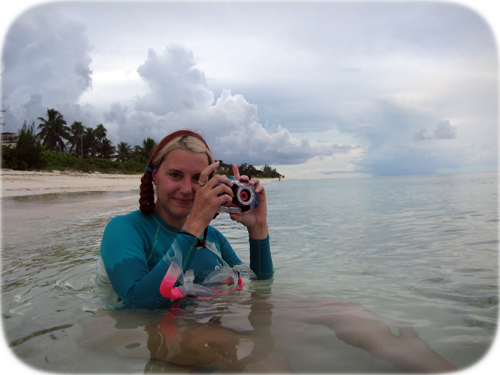
This afternoon we arrived in the Bahamas for the first time ever. Our lodgings, at Orange Hill are near the Lyndon Pindling International Airport. After checking in we undertook an E.S.S. mission off the beach in front of the hotel and found a wide variety of marine life.

img_3266

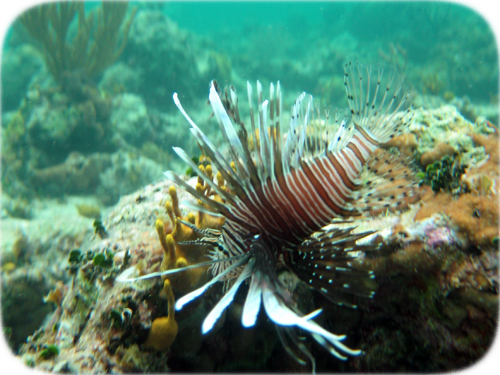
Unfortunately, we encountered four Lionfish, an invasive species from the Pacific Ocean. Although they are ravenous hunters with few local predators (especially with the overfishing of large fish like Grouper). On the other hand, they area a beautiful fish that is unafraid of humans.

img_3278

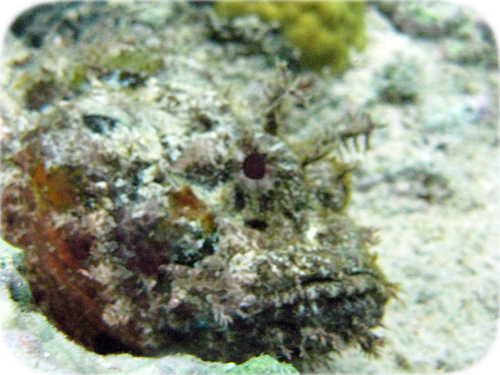
Marc AuMarc, with his keen eye for sea life (and creatures in general) also spotted a Stonefish, a poisonous fish that lives on the sea floor, carefully camouflaged.

img_3289

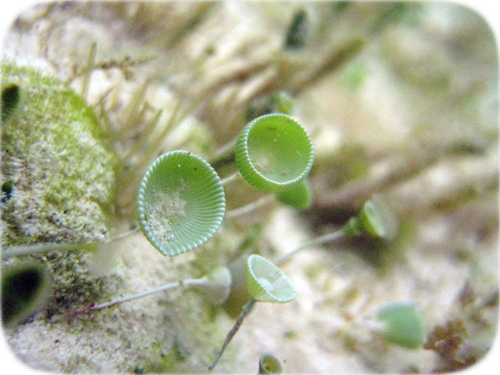
In the extreme shallows, we found many Mermaid’s Cups, an adorable species of green algae.

img_3308

After a wonderful snorkel, we enjoyed a beer back at the hotel with local photographer Ben Jamieson, and headed to Provence for a romantic dinner for two.


July 20th, 2009 by Marc AuMarc

Our Expedition section has been updated with a couple exiting recent expeditions: freshwater exploits in the Bennington area of Vermont and an exploration of the unique marshlands of Mordecai Island in New Jersey. In both cases (especially Vermont), these are unique expeditions to areas that may have had little or no extreme shallow snorkeling exploration in the past.


June 22nd, 2009 by Marc AuMarc

On our recent expedition to Roatan, Honduras, we undertook a very special mission on Karl Stanley’s submarine The Idabel. We set off in search of a ship called Wendy, which was thought to be 1.8 miles from the West End. The ship originally sank in a location that blocked access to Coxen Hole, on the the other side of the island, and was towed to its final resting place by a navy salvage ship. Karl had obtained the ship’s log, which specified the coordinates of the ship as well as its estimated depth, 420 fathoms.

This expedition started with a boat tow to the site where we hoped to find the ship. With a little trial and error, we were able to come up with a functional towing arrangement. Once near the site where we hoped to find the ship, we dropped down. We reached bottom sooner than we anticipated, I believe in the neighborhood of 1400-1500 feet, and headed down along the sea floor to 2540, the maximum depth ever reached by The Idabel (which was already the world’s deepest diving tourist submarine).

Upon reaching the estimated depth of the Wendy, we traversed at depth back towards West End, in the hope of finding the ship. While we did not, we did encounter many unusual creatures and a fascinating underwater landscape that alternated between gently sloping sandy bottom and rocky underwater cliffs.

Some of the more interesting creatures we encountered were the “squidopus,” an octopus-squid hybrid that turned out to be something called a Jewel Squid, a siphonophore, and a very strange, free-swimming, transparent sea cucumber. We saw several deep sea fish, including the Orange Roughy (which are thought to live up to 150 years) and the Tripod Fish, as well as the Chimaera, a cartilaginous fish that is perhaps a living link between sharks and rays and bony fishes.

Although we did not find the remains of the Wendy, our five-hour excursion was a great success. A welcome party greeted us upon our return, including the Mayor of West End. Below are some images from our ride, and stay tuned for video of our adventure!

[tiltviewer=flickr width=”500″ height=”500″ flickrtags=”may,roatan,submarine,2009,favorites”]



May 19th, 2009 by Marc AuMarc

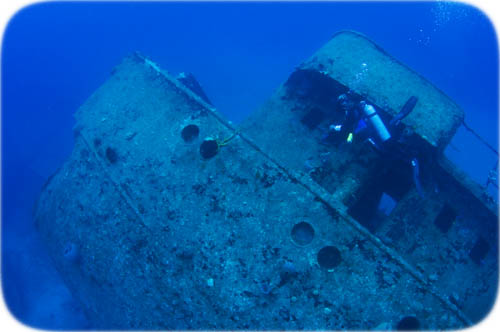
Jose started off the morning two-tank in spectacular fashion with a dive on the famous El Aguila wreck. This huge vessel rests in three sections alongside the reef wall. We investigated the wreck, floated over fields of garden eels peeping from beds of spun-silk algae a few inches above the sandy floor, and returned to the Aguila to glide up to the higher levels of the ship. Gigantic groupers followed us as we spiraled up around the looming mast and finned over to the wall, where huge parrotfish of every kind darted in and out of crevices and canyons.

At Overheat we were lucky enough to see two turtles! One was feeding, and the other one arced gracefully up to the surface, then back down to the reef where we were. We also encountered two big king crabs holding court from their recessed perches in the reef, one with a front claw missing, presumably from a mighty battle of the past. We also spotted our first trunkfish of this expedition. Whole schools of black durgeons swooped above the reef, and butterflyfish stopped in for expert detailing at the many cleaning stations.

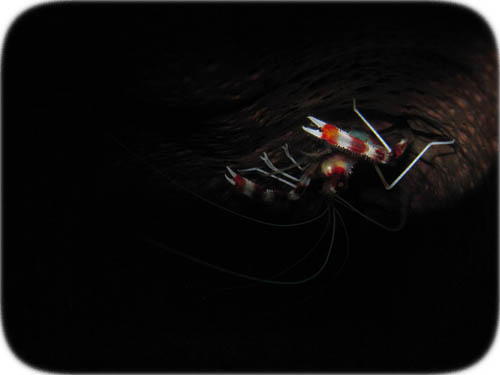
Rags took us to the Lighthouse site in the afternoon, where we found a whole crew of banded coral shrimp hanging out in a soft gorgonian on the sand patch where we made our initial descent. We observed another trunkfish bobbling along, and a juvenile trumpetfish pretending to be a frond under a ledge.

A full set of diving photos from the day is posted here.


May 18th, 2009 by Marc AuMarc

Rags, Juan and David took us on an excellent morning two-tank. Marc AuMarc tested his underwater housing by bringing it down empty, and I tried out a two-light configuration for the first time, with my Epoch 210 video light and a Sea & See YS27DX flash.

En route to Black Rock, we watched from the boat as flying fish skimmed along just above the sunlit wavetops, like narrow birds. Once underwater, we saw a large green moray coiled up under a ledge, with a juvenile spotted drum dancing around him! We had never observed these two creatures fraternizing before, so it was pretty amazing to see the moray weaving back and forth gently in the current, while the little drum flirted and flaunted about in circles and spirals, with his frilly fins floating behind him. Monsieur AuMarc also witnessed a baby moray snatch and eat a little fish, which he described as a flat round oval, black with a white top.

img_0277

Rags tells us that the Black Rock site has some extremely shallow areas so incredibly rich with life that she recommends the team investigate. We make plans to carry out an E.S.S. mission there.

img_0282

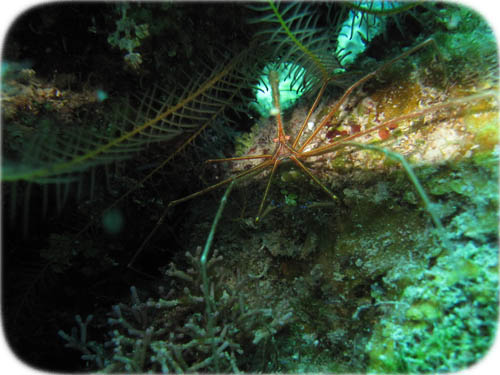
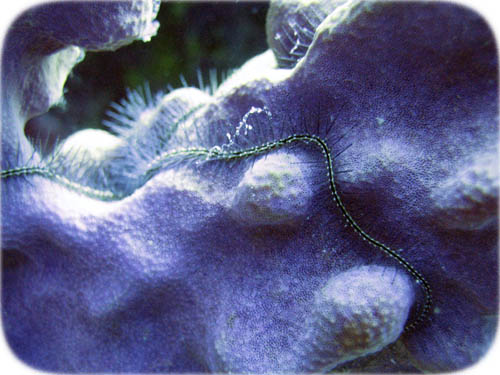
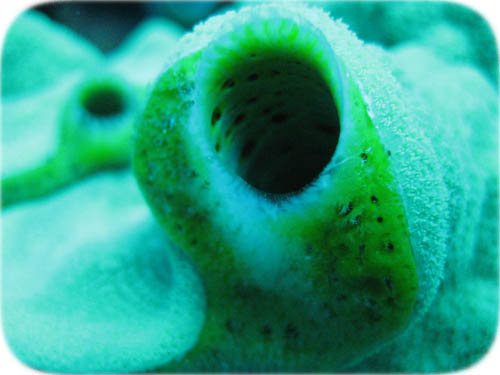
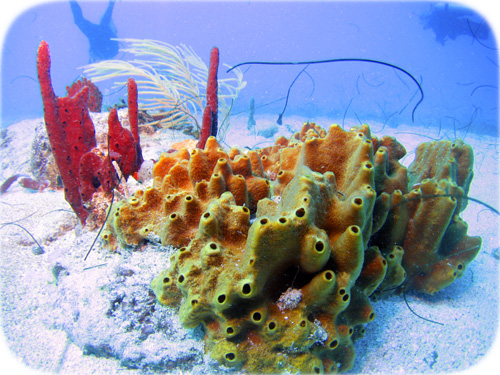
At Sea Quest we spotted some brittle stars twined around a sponge, an arrow crab perched on a coral shelf, and a spectacular sponge formation with a banded coral shrimp lurking inside one of the tubes. During the safety stop, a remora cruised under the boat, eyeing each of us appraisingly in turn as it looked for someone big to attach to. On the return to Half Moon Bay, a dolphin playfully leapt up beside the boat and kept speed with us. The boat captain stopped the engines and several excited divers jumped in with snorkel gear, but once there was no wake to surf, the dolphin swam away.

img_0318

img_0292

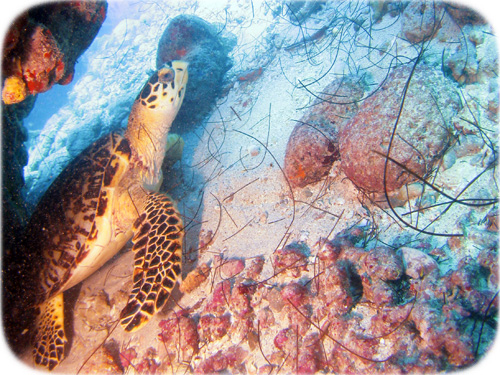
Pete took us on a fabulous afternoon dive to Moonlight, where we swam alongside a hawksbill turtle for a super-long time! He was just gliding along, looking for likely things to munch. An oceanic triggerfish flapped above the reef with its odd, off-kilter rhythm as we descended with the turtle. We also saw two juvenile spotted drums, one very tiny and extremely frisky with extra-long frills.

img_0325

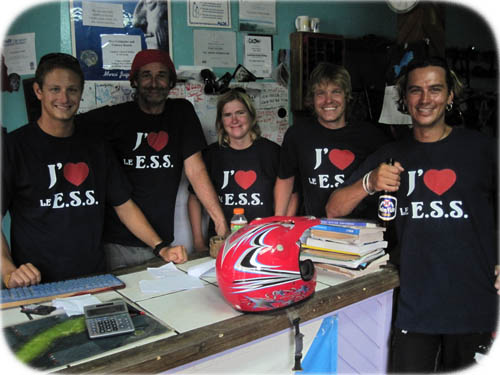
Back on shore, the team relaxed with some Salva Vidas on the Coconut deck, and handed out official expedition shirts to the Coconut Tree instructors & DMs. Below, Steve, P.J., Rags, Pete and Matt model the limited-edition beauties. They proved so popular we’ll have to bring more next time!

img_0390


May 17th, 2009 by Marc AuMarc

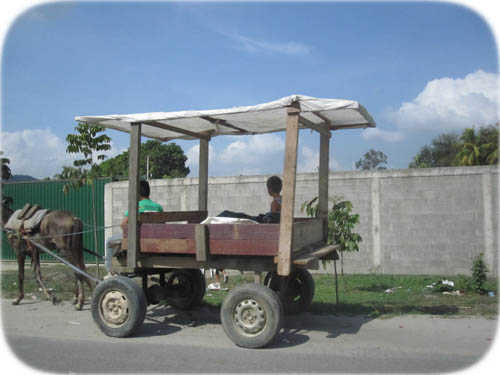
This morning we took a taxi back to the San Pedro Sula airport, passing horse-drawn carts filled with fruit,
img_0188
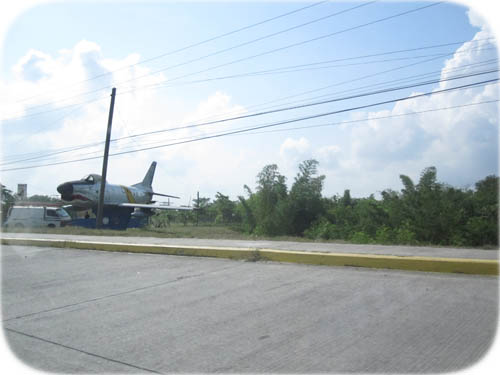
an old airplane with sweet WWII Flying Tigers-style nose art,
img_0194
and a billboard for what appears to be the awesomest educational facility ever: the Albert Einstein International School (“Where imagination is stronger than knowledge”).
img_0193

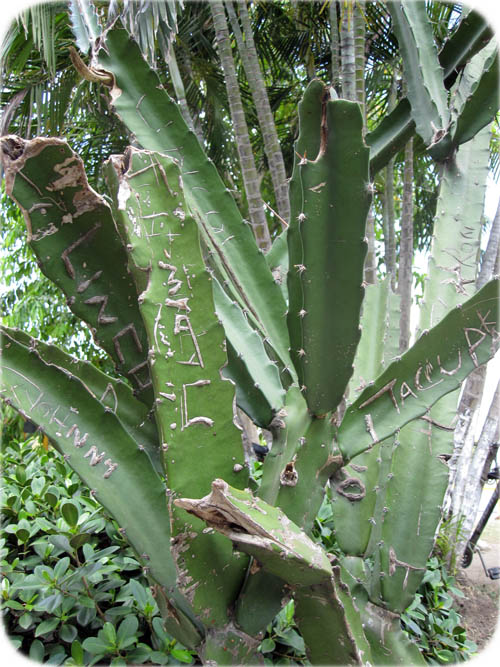
An interesting observation: apparently here cacti, rather than tree trunks, are the hot spots for carving one’s name.
img_0199

We hopped on a tiny plane and flew directly to Roatan,
img_0203
where we cabbed it to the West End. In 15 minutes flat we checked into our hotel, set up our camera gear and dive equipment, and hustled to Coconut Tree Divers just in time for the 1 pm dive at Fish Den.

There we spotted a turtle, many Black Durgeon, a big grouper, three little arrow crabs, and a rad brittle star clinging to a coral.
img_47501

img_4807

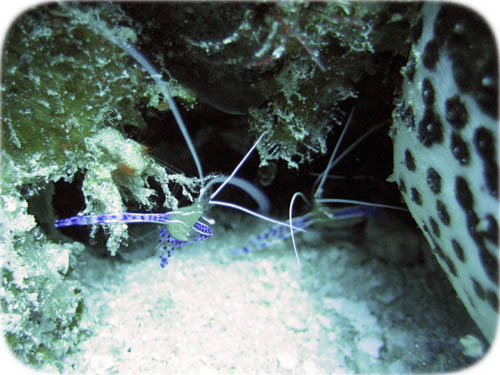
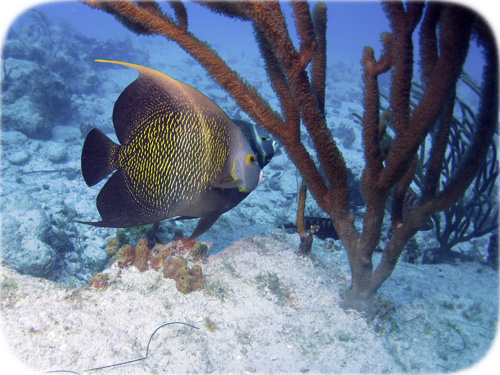
Our 2:30 pm site was Half Moon Bay Wall/Divermaster’s Choice, where we found a little cleaning station manned by a couple of Pederson Cleaning Shrimp, some cool coral, a beautiful French Angelfish, and a Queen Angelfish.

img_4831

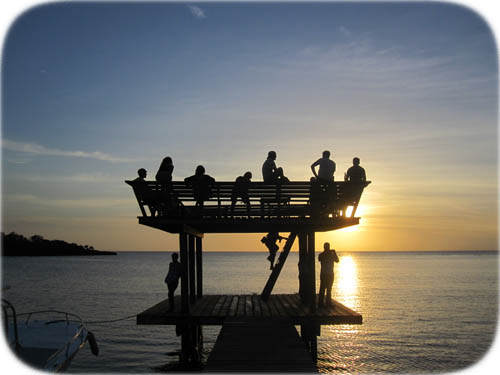
We watched the sunset from the dock with our friends from Coconut Tree, and ended the evening with drinks at Sundowner’s and some local pizza.

img_0206


May 17th, 2009 by Marc AuMarc

Here is one thing we have learned during our unplanned side trip to San Pedro, Honduras: everyone loves soccer. Even the geckos.

img_0174

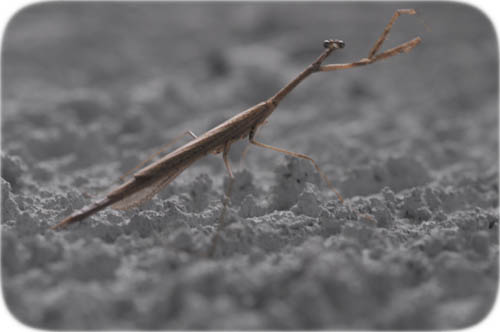
Mark took some pics of an awesome praying mantis outside our room this morning.

dsc_2238

And we had some kind of local pastry for breakfast, it was sort of like a miniature apple turnover. Speaking for the team, I can say we’re down with anyplace that has pie for breakfast.

We’re headed to the airport in a few minutes to try to get to Roatan–wish us luck!


May 16th, 2009 by Marc AuMarc

As we have learned from the pioneer of oceanic exploration, and our inspiration, Captain Jacques-Yves Cousteau, one must always be prepared for the unexpected when on expedition. Les Fruits De Mer have spent most of the first day of our May 2009 Roatan mission in glamorous Miami, due to air travel hijinks. We won’t be arriving in Roatan until tomorrow morning, but our team will be experiencing unanticipated, and surely amazing, adventuring while stranded in the Honduran city of San Pedro Sula this evening.

img_0154

img_0157

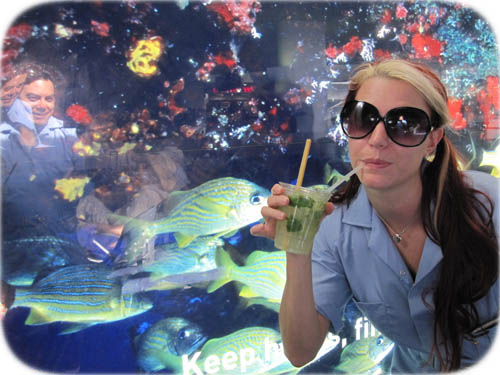
In the meantime we have conducted a scientific survey of the various mojitos available, here in Miami under the “neon reef”.

img_0159

Stay tuned for more adventures!

img_0164


March 24th, 2009 by Marc AuMarc

We just posted about our mini-expedition to the Seattle Aquarium, including plenty of photos from the trip. We saw an octopus being fed and learned a lot about the sea life of the Pacific Northwest. Definitely check it out.


February 16th, 2009 by Marc AuMarc

Today Chris and Sally closed the dive shop so we could hunt for new dive sites together. Accompanied by another Chris, the five of us headed in search of new and exciting dive locations.

img_2437

Our first stop was on the Dutch side of the island near the mile marker buoy. Despite the rolling surf, we were able to spot the buoy above the wreck of The Prosthelyte. We entered the water unsure of what we would find, and were pleasantly surprised. The wreck itself was right below us, and just beyond were large coral heads with many swim throughs. The fish were plentiful, including many small Barracuda. As we were performing our safety stop at five meters, we spied a shark below.

Our next stop was another wreck, the Roro, a large, largely intact barge. We swam through the ship and around the outside. Again there were many fish. Nearby perhaps 25 concrete pods marked the beginnings of an artificial reef project. All in all, another terrific site.

img_2338

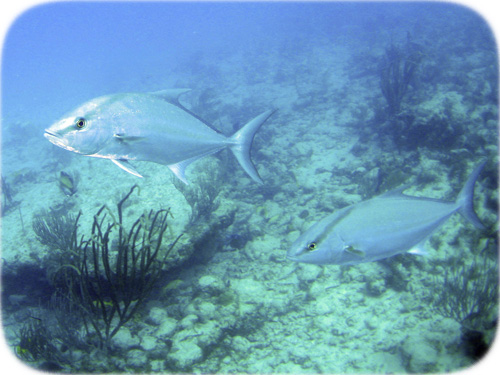
After lunch, we headed to the French side of the island and out towards the heel of Anguilla. We stopped about a third of the way to Anguilla near a series of fish trap buoys and descended, uncertain of what we would find. Our first encounter was with a large Spiny Lobster. We then traversed a large reef prairie with many beautiful sponges adjoining some interesting coral formations. We saw two turtles, including one resting under a coral ledge and were joined by a pair of Almaco Jacks, who followed us on much of our dive. We christened this newly discovered dive site Chris’s Reef.

img_2472

img_2483

img_2489

img_2485

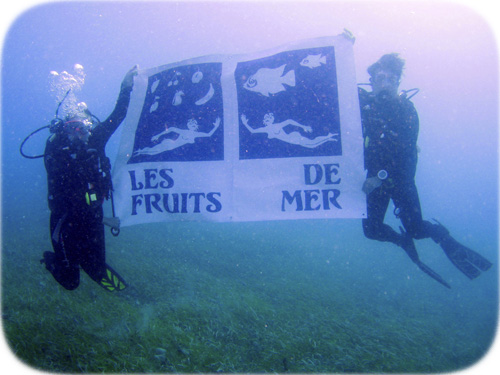
On our way back we stopped at Creole Rock to practice our underwater navigation skills. On the grassy sea bed, Madam J spotted a large Stingray. We also deployed our banner underwater to commemorate a successful expedition.

img_2510