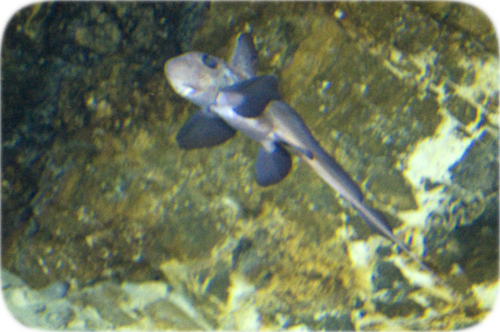
A new species of Ghost Shark was discovered off the coast of Southern California. It is now called the Eastern Pacific black ghostshark (Hydrolagus melanophasma) and it is a type of Chimaera. Chimaeras are cartilaginous fish that are very ancient in design – hundreds of millions of years old. Their closest relatives are sharks and rays. These critters can look mighty odd. Here’s a photo of a Chimaera we saw in Roatan, while deep underwater in the submarine Idabel.
Aliens? No, Cnidarians. Cnidaria is a phylum of animals that includes jellyfish and anemones. Here, time lapse photography of cnidarians in aquariums is turned into video.
Leah Neal, one of the intrepid Lionfish hunters we met in the Bahamas, sent us a link to the Die, Lionfish, Die facebook group. This is probably going to be about the only time we advocate fish killing here, but it is a special situation and it seems that the only chance we have of limiting their spread is human intervention.
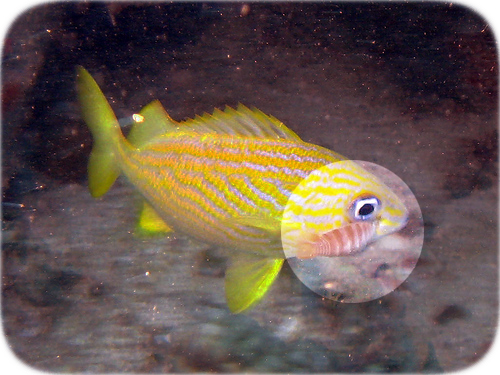
We knew about Giant Isopods that live in the deep oceans. We have also seen smaller isopods that attach to the faces of fish and live off scraps that are left when the fish eat:
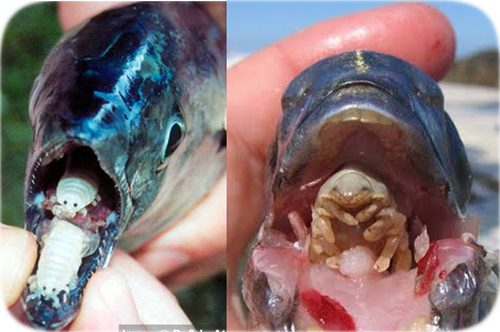
Until today, however, I did not know about isopods that live in the mouths of fish. And it gets worse. The Tongue Eating Louse (Cymothoa exigua) enters a fish through its gills and attaches to the base of the tongue, where it uses claws on its front legs to drain blood from the tongue. As the tongue atrophies, the parasite attaches itself to the tongue stump and acts as if it were the tongue. Apparently the fish can even control the parasite as if it were their tongue, although how we figured that out I am not sure.
The parasites live off the blood or mucus of the fish and, aside from eating the tongue, do no other harm to their host. Normally found off the coast of California, they have also turned up in the UK in 2005 and 2009.
On our last day we decided to head to Love Beach, approximately 2-3 miles from our lodgings at Orange Hill. Known for its snorkeling, the beach was deserted when we arrived. There is a small watersports shop that opens at 10am on slow days. The snorkeling area was marked by three orange buoys.
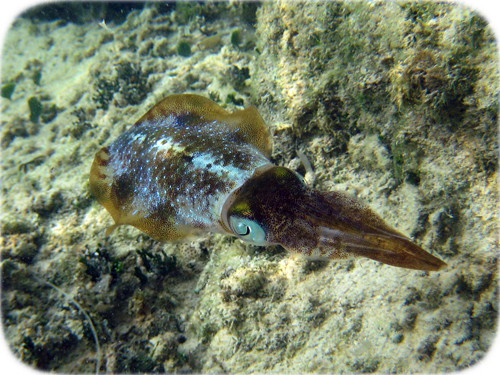
As we swam out into the shallows, one of the first things I encountered was a pair of Caribbean Reef Squid.
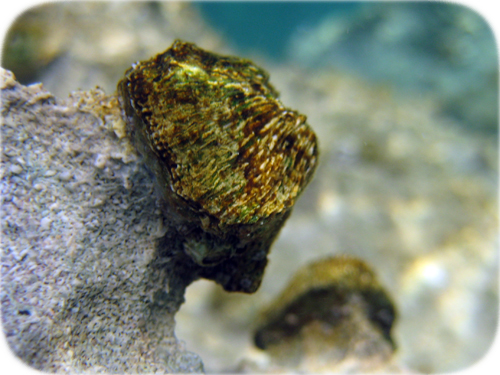
We traversed the shallows, a formation of rocks with small corals and sponges growing on them. One of the strange things we encountered were these shellfish-type animals. They seemed embedded in the rock, almost like fossils.
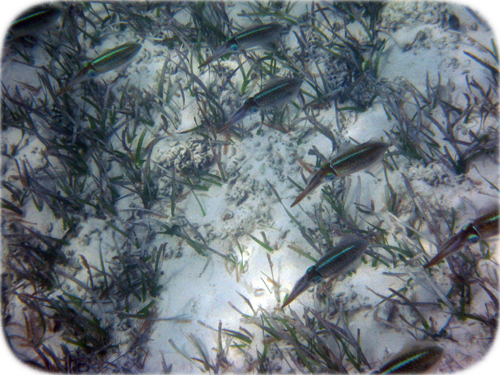
We finished our snorkel with school of 17 Caribbean Reef Squid swimming in formation. This was probably the largest group of them we have encountered to date, and they were in shallow (approx. 6 feet) but not extremely shallow water.
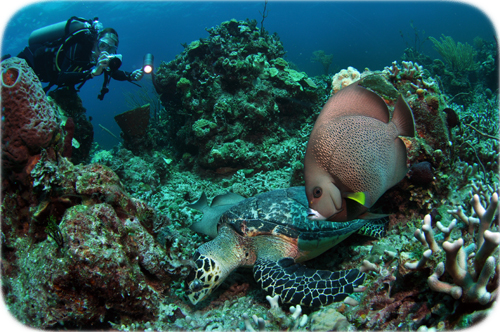
Today we did four dives, the Sand Chute, which is named after a chute of sand leading out to the reef wall. Next we dove Mike’s Reef, where we encountered a feeding sea turtle and a band of Angelfish who gathered for leftovers.
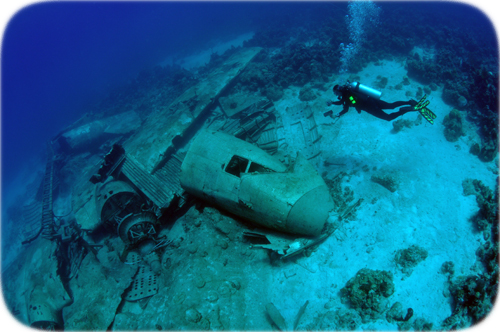
Next we headed to DC-3, a site named after the model of plane that sits on the bottom. This plane was used in the nigh-unwatchable movie “Into the Blue” featuring Jessica Alba. The wreck was tight and it was very cool to see a large plane underwater.
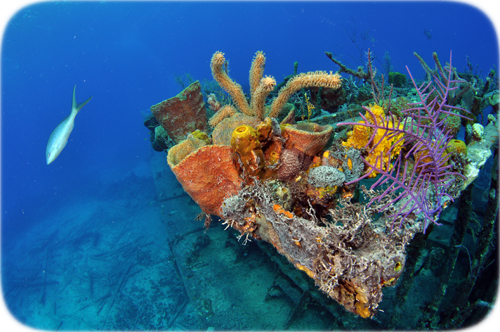
Last, we dove the Willaurie (and the nearby Anthony Bell, a new wreck only weeks under the water). The Willaurie has an amazing trellis/scaffolding type structure that supports a wide array of sponges and corals. All in all, a fantastic place to finish the diving portion of our expedition.
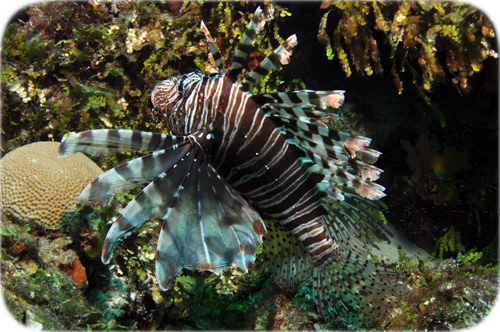
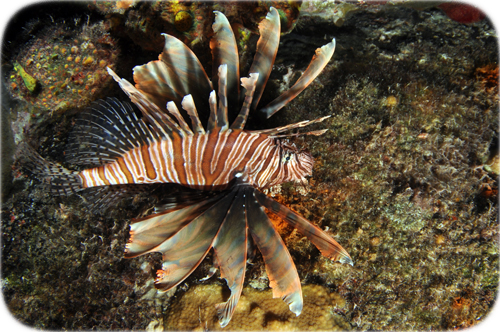
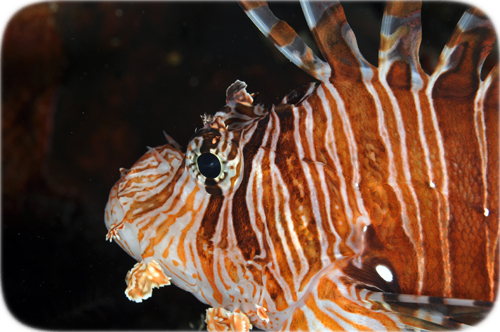
They were in Bermuda when we last went on expedition there and they recently arrived in Roatan, Honduras. They’re beautiful, they have poisonous spines and they eat everything on the reef. With what seems to be no natural predators, the Lionfish (Pterois volitans) is an Indo-pacific species that is taking the Caribbean by storm.
Since their arrival in the Bahamas five or more years ago, they have become extremely common. They reproduce quickly and have no known local predators. We have seen them on every dive and snorkel we have taken since arriving here.
Their insouciance and feathery fins make them an ideal photo-op, but behind each photo is a trail of death and destruction. While we were here a group from the National Aquarium in Washington, DC and reef.org was hunting Lionfish with nets and spears in an attempt to stem their spread. A typical day’s catch was 50-70 fish or more. Some dives were aborted when the local sharks became interested in the activity. Unfortunately, the sharks seemed entirely uninterested in consuming the Lionfish.
It’s hard to imagine these fish not remaining endemic in the Caribbean. One last hope may be to promote Lionfish as a tasty meal, which apparently they are, but even then the odds seem to be against it. In Honduras, where they have just arrived, efforts are underway to eradicate them before they become established. Hopefully they have some success.
Les Fruits de Mer completed five dives today, including a shark feeding and a night dive at the spectacular James Bond wrecks.
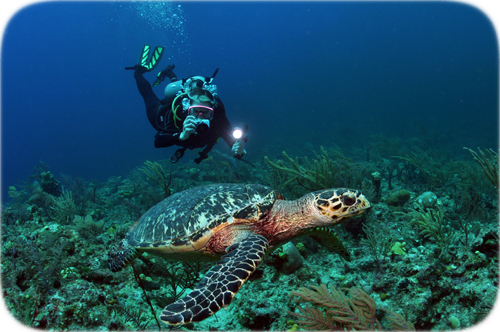
After a couple of morning dives, we undertook the first afternoon shark dive on the reef. After seeing a number of sharks who were excited about the upcoming feeding, we took a quick trip out to the reef wall and spotted this turtle.
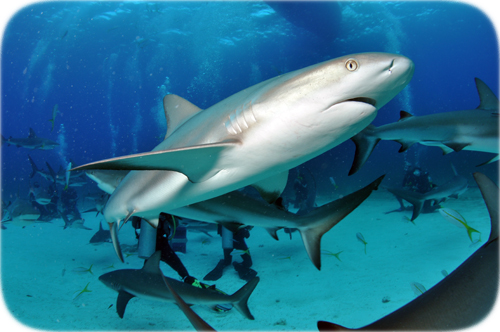
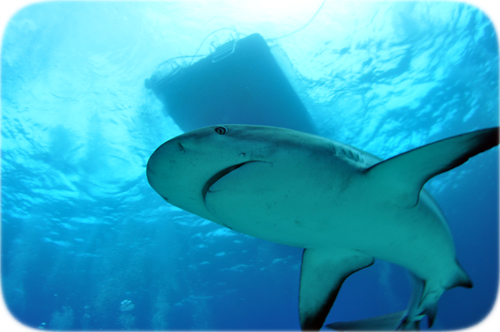
The shark feeding was quite amazing. Dozens of reef sharks congregated around the bait box and swam within inches of us…and even closer.
It was wonderful to dive with so many sharks, particularly as they are quickly becoming endangered around the world, with hundreds of millions killed each year, primarily for their fins.
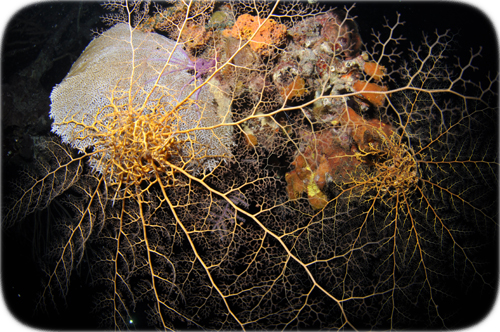
We finished the day with a night dive on the James Bond wrecks, so named because they appeared in the films Never Say Never Again and Thunderball. They were full of basket stars, one of my favorite sea creatures.